Inclusive dance in a public-school setting: practical strategies for teaching the same standards to general and special education students in one room, with stories from Woodland High School and Karina’s Class.
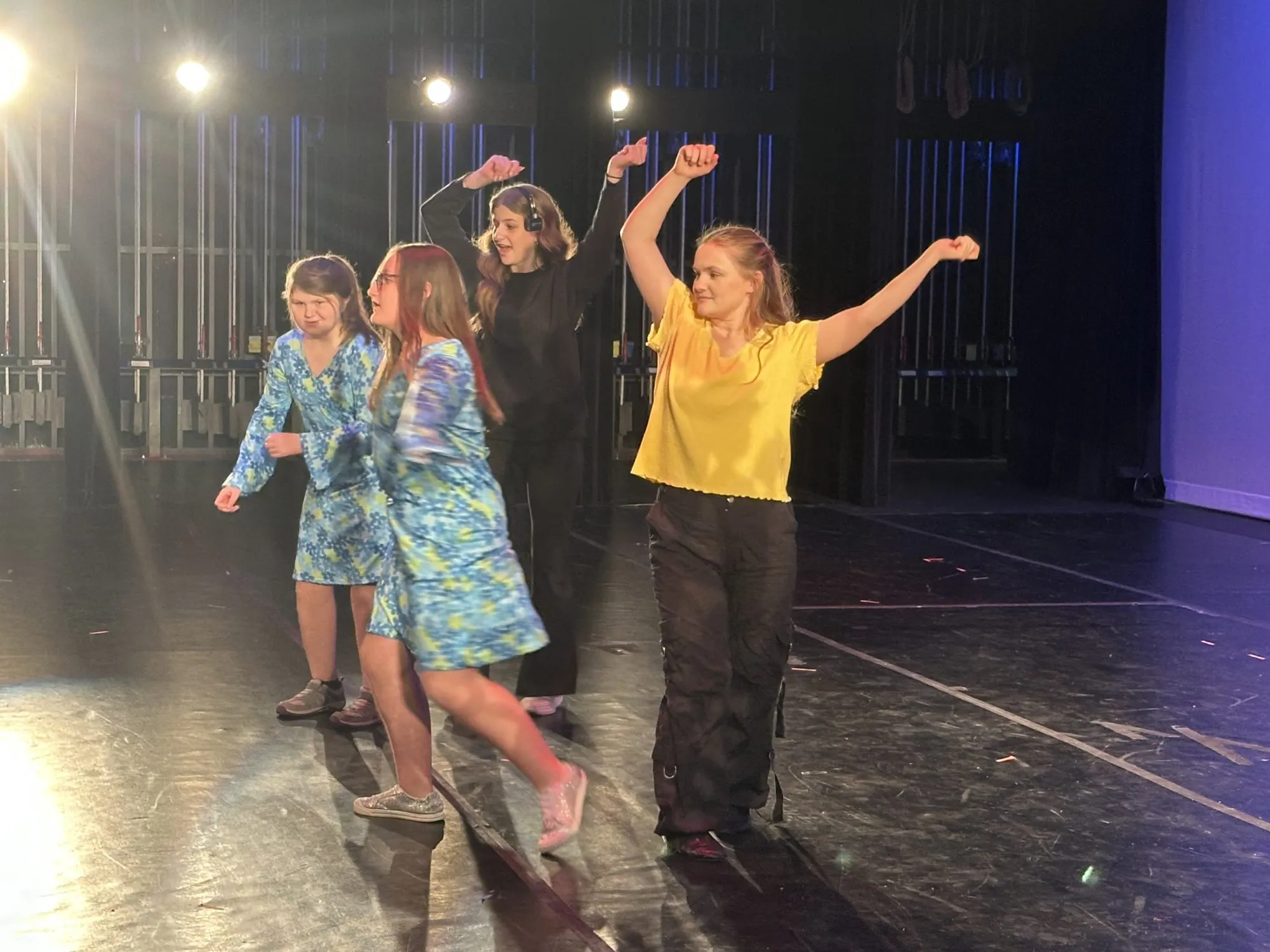
Performing together on the concert stage.
NDEO 2025 national conference
Dance for Every Body: Dance for All Abilities
Disability and Pedagogy track · October 2025. Inclusive Dance I brings general and special education students together to learn the same standards and perform each semester - including Karina’s Class, which began at Steps of Faith Dance Studio and continues at Woodland High School with principal support.
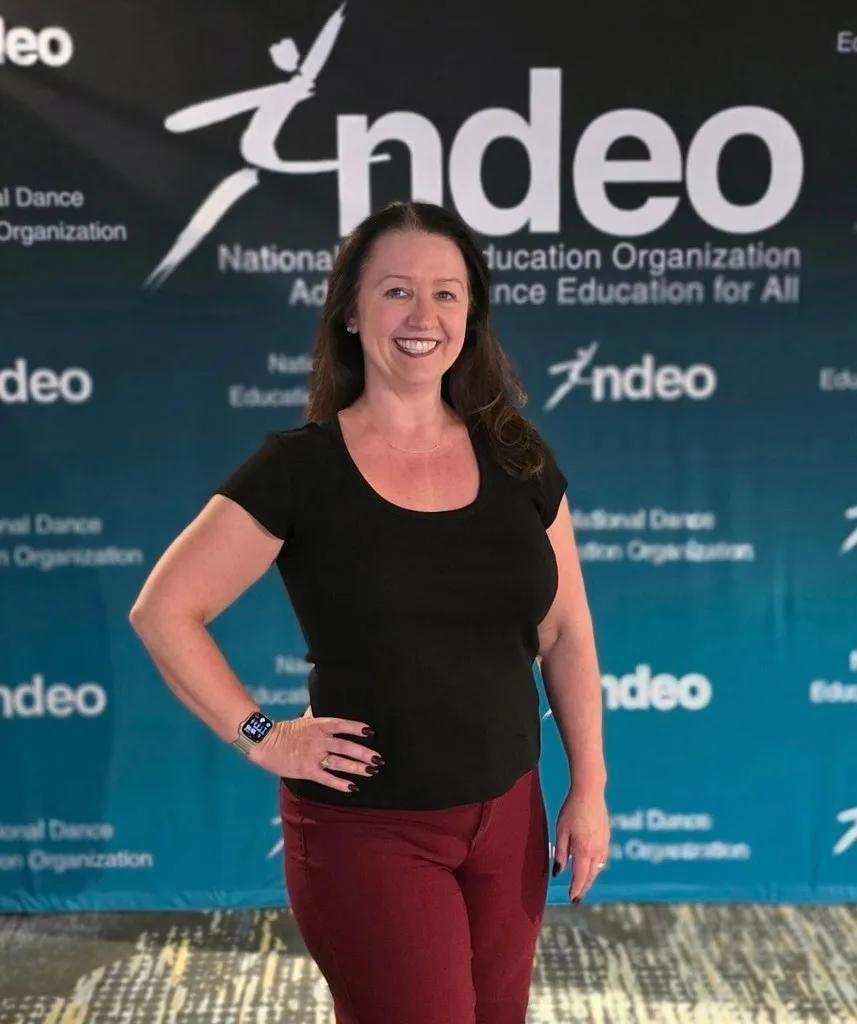
At the NDEO national conference.
Three strategies
Accommodate the student, not the diagnosis
One student could not tolerate clapping because of sensory needs tied to a childhood injury. Instead of removing him from class rituals, we moved from snaps to golf claps to choreography that built clapping in gradually. By semester’s end he clapped on stage and attended professional performances with his classmates.
Use the people already around the student
One student’s Learning Ladder goals included fist bumps instead of hugs. I coordinated with her other teachers so dance class reinforced the same expectations she heard everywhere else, and she got one consistent message all day.
Embrace social emotional learning
Students with prior studio training were taking over choreography projects while others felt they did not belong. Through Connected Arts Network action research, I asked how SEL practices could help every student feel valued regardless of training. Pair/Think/Create peer teaching and structured group roles gave every student a real part to play.
The clapping dance from the first strategy, on stage with the whole class.
Dance I etiquette learning ladder
Concrete rungs turn expectations into steps students can master - shared with classroom teachers when goals overlap.
Enter and dress out
Personal items
Find your space
Warm-up
Spatial awareness
Relational awareness
Reverence
Respect the space
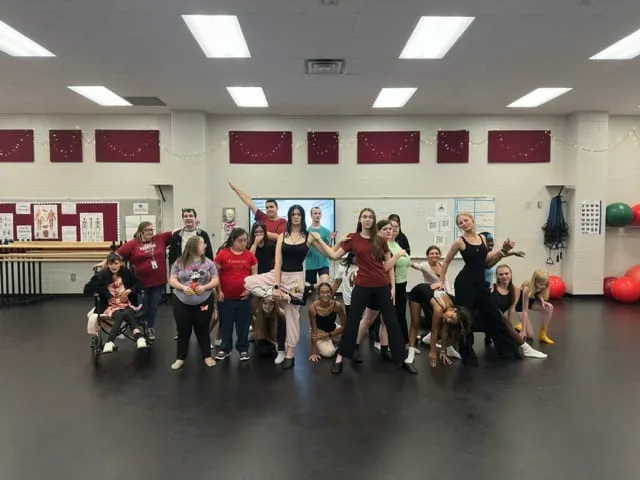
One class, every ability, one finishing pose.
Performing a dramatic pose together between classes.
Who benefits
Students with disabilities
Access to grade-level standards, peer relationships, and performance experiences that build confidence and communication.
General education students
Empathy, collaboration, and leadership as they learn alongside classmates with different strengths and needs.
Dance teachers
A repeatable model for high expectations with flexible instruction - assessment focused on individual progress, not comparison.
Special education staff
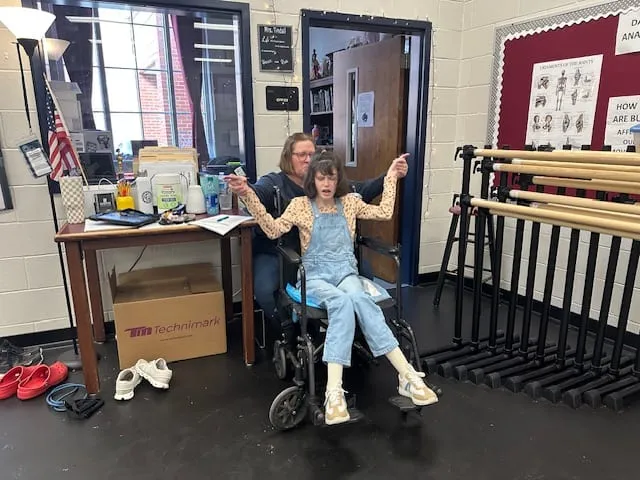
A dance teacher who invites paras and therapists into the studio, lines up goals across settings, and celebrates with them at concerts.
More stories
One student preferred bright lights and loud music - a reminder to observe before assuming what a label means for stimulation.
A non-verbal student in Karina’s Class responded to basic ASL cues (Stop, Go, Dance, Sit, More, Done) and began seeking connection in class.
One dancer could not jump at age eight; years of consistent practice brought two-foot jumps and grand battements across the floor.
One dancer builds core strength right inside dance class, with exercises that occupational therapy partners and I design together.
Use the presentation
The slides from my NDEO 2025 session are free to view, share, and adapt for your own classes and professional learning.