Open to every student
I redesigned the class structure in 2020. Any student can start in Dance I and move up through Dance IV by mastering the skills at each level.
Standards written from the classroom up, a dance program open to every student, and a fine arts department that serves all four arts.
As Fine Arts Department Lead, I support teachers across dance, music, theatre, and visual art. I run department planning, observe and coach teachers, and oversee our fine arts events. I co-produce and choreograph our fine arts productions, and I won a $5,000 grant from the Georgia Council for the Arts to support school-wide musical programs for both the 2025–2026 and the 2026–2027 grant cycles.
Member, Georgia Department of Education Power Standards Writing Committee for Dance Education (2005). I wrote the power standards for dance. I teach daily to the Georgia Standards of Excellence and design Dance I–IV with sequenced objectives, 80% summative and 20% supportive grading, and self- and peer-assessment rubrics.
I have built dance programs at three schools in two school systems, Cobb County and Bartow County. Each school had different students, staff, and resources, and the same principles worked in every one. That is how I know they can work in other schools too. Here is how they look at Woodland High School today.
I redesigned the class structure in 2020. Any student can start in Dance I and move up through Dance IV by mastering the skills at each level.
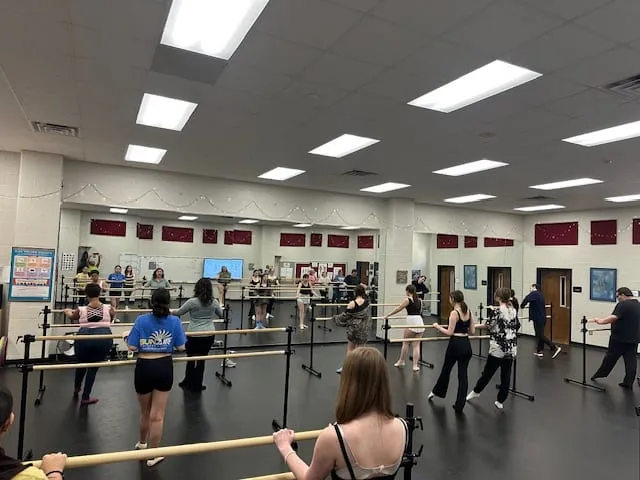
I do a full week of technique that includes ballet, jazz, contemporary, and musical theater dance classes. I incorporate daily conditioning exercises, and we also study modern dance and learn basic improvisational skills.
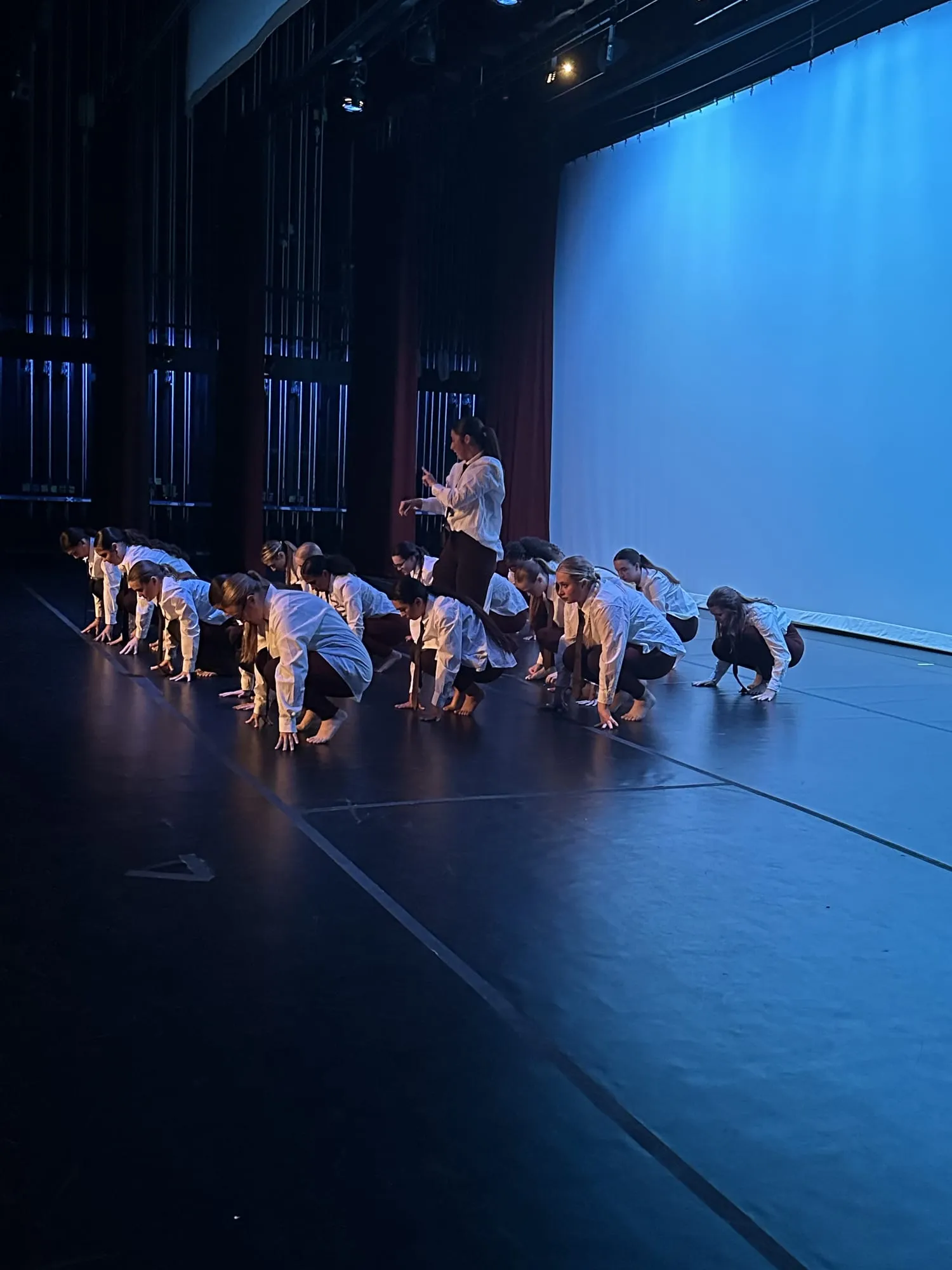
Every class performs each semester. Advanced dancers perform at least five dances, intermediate at least three, and beginners two or three, and every level performs a choreography project.
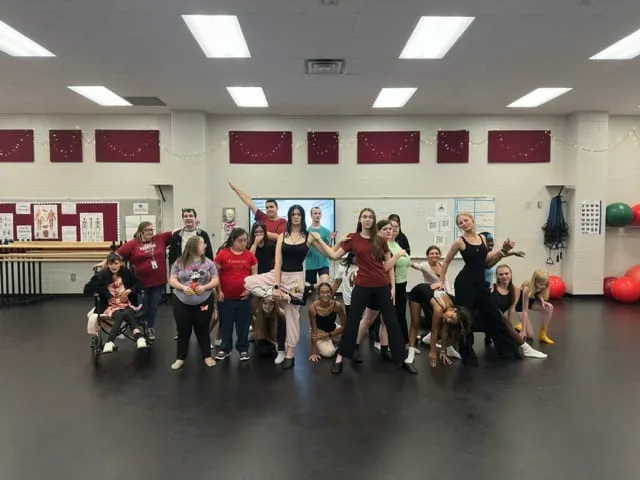
Inclusive Dance I brings general and special education students together to learn the same standards and perform each semester.
In Dance I, a learning ladder turns class expectations into small steps every student can master, from entering and dressing out to respecting the space. When a student’s goals overlap with other classes, I share the ladder with those teachers so the message stays consistent. See the Dance I learning ladder.
Aligned to the National Core Arts Standards anchor processes.
| Process | In class | Evidence |
|---|---|---|
| Creating | Mixed-ability groups each choreograph a section of a song; sections are stitched into one class dance for the concert. Every student contributes and explains their artistic choices. | Student-choreographed class dances performed at concerts |
| Performing |
| Winter and spring concert programs |
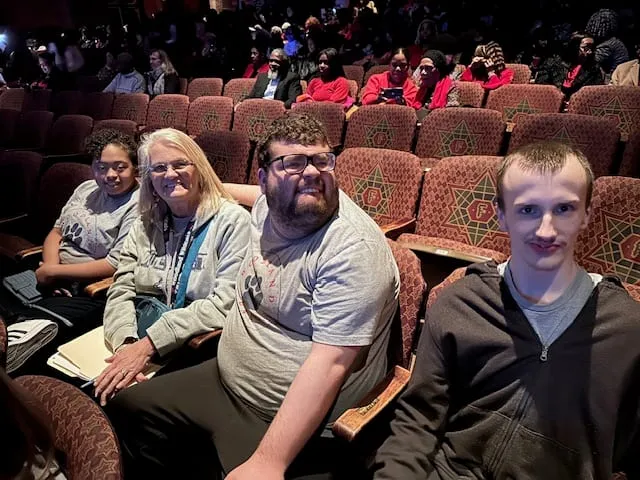
| Responding | Self- and peer-assessment rubrics, end-of-semester reflections, Critical Response Process, and field trips to professional performances including Alvin Ailey American Dance Theater and Kennesaw State University Dance Department performances. | Course syllabi and Connected Arts Network action research |
| Connecting | SEL competencies in improvisation and group work; kinesiology and injury prevention; cultural and social dance units that connect technique to community and history. | Dance I–IV course design, informed by NDEO conferences |
Inclusive dance in a public-school setting: practical strategies for teaching the same standards to general and special education students in one room, with stories from Woodland High School and Karina’s Class.
I assess individual progress, not comparison between students. That lens keeps grade-band standards honest: every learner should show growth against the same expectations, with instruction adapted to how they learn best. I refine my teaching in research cycles: I reflect, try a change, assess what students show me, and revise. Student assessment data guides each revision to my curriculum.
I use technology to facilitate my students’ education in the following ways:
AI in the Arts Classroom
How I use AI to save planning time, and prompts any arts teacher can try in dance, theatre, music, and visual art.
I have spent more than 30 years teaching dance from pre-K through university, and one belief runs through all of it: every student deserves an effective arts education. That belief has carried me beyond my own classroom - onto the committee that wrote Georgia’s dance power standards, into national action research with the Connected Arts Network, and to the NDEO national conference to share what inclusive teaching looks like. I serve because the work is bigger than any one program. When teachers have clear, practical standards and the support to teach them well, students of every ability get the chance to create, perform, and grow. Helping the field get there, from the studio floor to the wider profession, is work I care about deeply and will keep doing.